
Daily driving
Consistent combustion with variable fuel quality and in high summer temperatures; long-term performance through clean injectors.
GDIMPIAll grades

Benefits & applications
The benefits Knockless delivers and the applications where it makes the greatest difference — with realistic expectations and the engineering behind them.
Benefits
Every benefit is grounded in well-established principles of combustion chemistry and engine management.
At the recommended dose, Knockless raises the octane rating of fuel by approximately 3 RON — up to 8 RON in low-grade fuel. This additional margin allows the ignition system to operate at optimal values — particularly in engines with high compression ratios (11:1 and above) or turbocharging.
When auto-ignition of the end gas is delayed, pressure oscillations are reduced. Pistons, rings, con-rod bearings and cylinder head are exposed to lower mechanical and thermal stress.
When the engine management system no longer has to retard ignition timing, torque becomes more consistent — especially in the mid-range and under load. Throttle response feels more direct.
Optimal ignition timing and more uniform flame propagation help convert a greater share of fuel energy into mechanical work. The effect depends on driving style, engine and fuel.
Cleaning components protect injectors and combustion chambers. Clean injectors maintain their designed spray pattern, and cleaner combustion helps reduce harmful exhaust gases.
The formulation helps protect engine components against wear, including valve seats. Compatible with all petrol engines — including turbocharged and supercharged models — and all petrol grades.
Greatest benefit
The benefit is proportional to how close the engine operates to its knock limit.
Knockless does not promise power beyond what the engine was designed for. The gain is most noticeable in conditions where the engine would otherwise retard ignition timing because of knock.
Applications
One formula for every type of gasoline engine, from daily driving to track days.
Consistent combustion with variable fuel quality and in high summer temperatures; long-term performance through clean injectors.
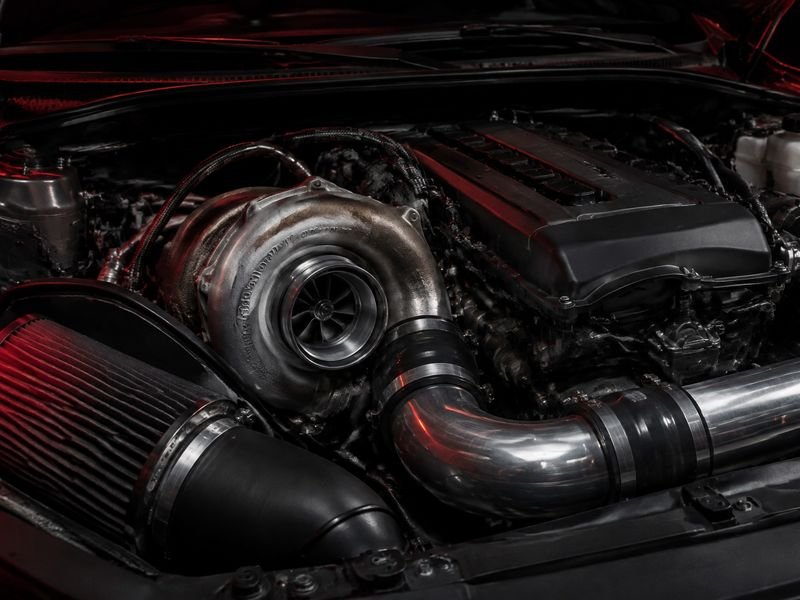
High boost pressure and charge temperature increase knock tendency. Knockless gives turbocharged, supercharged and remapped engines additional knock margin.

For all petrol motorcycles. For small tanks, scale the dose to the fuel volume (approximately 6 ml/L).

Adds knock resistance for engines designed for higher-octane fuel and helps protect against wear, including on valve seats.

Sustained full throttle, high oil and coolant temperatures: track conditions push the knock limit. Use at the last refuel before the event.
Compatibility
Knockless is compatible with all petrol engines, regardless of injection type or induction system, with or without a catalytic converter.
| Engine / system | Status |
|---|---|
| Direct-injection gasoline engines (GDI / DI) | Suitable |
| Port / multi-point injection (MPI / IDI) | Suitable |
| Turbocharged and supercharged engines | Suitable |
| Naturally aspirated engines | Suitable |
| Gasoline hybrid vehicles | Suitable |
| Vehicles with catalytic converter | Suitable |
| Off-road vehicles (4x4) | Suitable |
| Carburetted and classic engines | Suitable |
| 2- and 4-stroke motorcycle engines | Suitable |
| Small engines (lawnmowers, generators) | Suitable |
| All petrol grades | Suitable |
| LPG / CNG (gas phase) | Petrol circuit only |
| Diesel engines | Not suitable |
Our application team is ready to answer questions specific to your vehicle, engine and operating conditions.